In the grand scheme of the modern automotive industry, the Automotive Wiring Harness is often figuratively described as the "nervous system" of a vehicle. It is not only the carrier of electrical transmission but also the hub of signal transmission. With the rapid advancement of automotive electronics and intelligence, the design and manufacturing process of the Automotive Wiring Harness has become one of the core indicators for measuring a vehicle's reliability and sophistication.
As a seasoned player in the industry, Zhejiang Hui You Auto Parts Co., Ltd. has always been rooted in this precision field, leveraging its profound engineering expertise to transform complex circuit logic into efficient and stable physical connection solutions.
Core Components and Functions of Automotive Wiring Harnesses
Automotive wiring harnesses are not simply bundles of wires, but a highly integrated electrical distribution system.
1. Signal Transmission and Power Distribution
In the complex in-vehicle environment, automotive wiring harnesses perform a dual task. On one hand, they need to provide stable power to high-power devices (such as starters and lighting systems); on the other hand, they must ensure that weak sensor signals are accurately transmitted to the central control computer (ECU) without electromagnetic interference.
2. Insulation and Protection System
Due to the extreme operating environment of vehicles, wiring harnesses must possess extremely high weather resistance. Zhejiang Hui You, in its solution design, focused on the wear resistance, flame retardancy, and moisture resistance of materials. The external wrapping materials of the wiring harness, ranging from traditional PVC tape to high-performance corrugated tubing and braided mesh, are all designed to withstand the high temperatures of the engine compartment and the mud and water corrosion of the chassis.
3. Connector and Terminal Technology
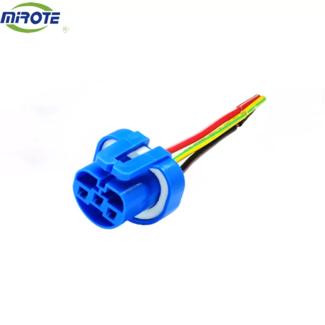
The reliability of a wiring harness often depends on the connection points. High-quality terminal crimping technology and sealed connectors are key to preventing poor contact or short circuits. In the complex Auto Wiring Harness architecture, the precision of the connectors directly affects the efficiency of vehicle assembly and the convenience of subsequent maintenance.
Evolution Trends of Modern Automotive Wiring Harness
With the development of new energy and autonomous driving technologies, the wiring harness industry is undergoing a technological revolution. Zhejiang Hui You keeps pace with the industry's forefront, continuously optimizing its engineering logic.
Lightweighting Trend: To improve range and reduce energy consumption, aluminum wires and thinner copper wires are being used on a large scale.
High-Voltage System Integration: For electric vehicles, high-voltage wiring harnesses face stringent requirements for shielding, insulation reliability, and safety interlocking functions.
High-Speed Data Transmission: Smart cockpits require wiring harnesses capable of transmitting large amounts of high-definition video signals and sensor data; Ethernet wiring harnesses have become mainstream.
Key Technical Parameter Overview (Logical Reference)
The table below shows the physical and electrical dimensions that the professional engineering team focuses on when designing Auto Wiring Harnesses:
| Focus Dimension |
Technical Key Points |
Application Context & Rationale |
| Conductor Specifications |
Cross-sectional area, material (Copper/Aluminum), temperature resistance ratings |
Determines current-carrying capacity, voltage drop management, and overall harness weight reduction. |
| Shielding Design |
Braided shielding, aluminum foil wrapping, twisting pitch control |
Critical for mitigating Electromagnetic Interference (EMI) in high-speed data lines and sensor circuits. |
| Ingress Protection (IP) |
IPX7 / IPX9K rated sealing and connector integrity |
Specifically engineered for exterior components, chassis regions, and areas exposed to high-pressure washing. |
| Retention & Routing |
Integrated cable ties, specialized clips, and bracketry systems |
Ensures physical stability and prevents abrasion or fatigue failure under extreme vehicle vibration. |
| Circuit Architecture |
Parallel distribution, decentralized control logic, fuse box integration |
Optimizes electrical distribution efficiency and enhances system redundancy for safety-critical functions. |
Zhejiang Hui You Auto Parts Co., Ltd.'s Service Advantages
Zhejiang Hui You not only provides products, but also customized solutions based on customer needs.
R&D-Driven Engineering Team: Our professional engineering team is deeply involved in the early development stages of our clients. From reviewing electrical schematics to optimizing 3D routing, Zhejiang Hui You is committed to solving potential electromagnetic compatibility (EMC) and spatial interference issues at the design stage.
Global Service Perspective: Adhering to a "customer-centric" philosophy, we understand the differences in standards for Automotive Wiring Harness across different global markets. Through continuous process innovation, we ensure that every delivered wiring harness can adapt to the extreme climates and regulatory requirements of different regions.
FAQ: Professional Q&A on Automotive Wiring Harnesses
Q1: Why must Electromagnetic Compatibility (EMC) be considered when designing an Automotive Wiring Harness?
With the increasing number of electronic devices in vehicles, interference can occur between wires. Inadequate shielding can cause navigation malfunctions and even affect safety signals in the powertrain. Therefore, professional wiring harness design must address this issue through physical isolation or special shielding methods.
Q2: What factors typically affect the lifespan of an Automotive Wiring Harness?
The main influencing factors include ambient temperature (long-term high temperatures cause insulation embrittlement), mechanical vibration (leading to loose connectors or wire breakage), and chemical corrosion (such as salt spray and oil contamination).
Q3: How can wiring harnesses be made lighter?
Besides using lighter conductor materials, optimizing wiring paths, reducing redundant loops, and using highly integrated central control boxes are also important means of achieving lightweighting.
Q4: How does Zhejiang Hui You ensure the assembly accuracy of complex wiring harnesses?
We utilize high-precision testing fixtures and automated testing benches to perform continuity, misalignment, and insulation tests on each circuit, ensuring that every delivered product fully complies with engineering drawing requirements.
Q5: What is the biggest difference between wiring harnesses for new energy vehicles and those for traditional fuel vehicles?
The core difference lies in the high-voltage system. New energy vehicles need to handle voltages of several hundred volts, which presents entirely new challenges for wiring harness color markings (orange warning), creepage distances, electromagnetic shielding, and emergency power failure protection.


 English
 中文简体
中文简体 Español
 Add :Gulin Industrial Zone, Gulin, Haishu District, Ningbo, Zhejiang, China
 Tel :+86-574-88124152
 Fax :+86-574-88044539
 Mob/WhatsApp :+86-13858360959
 E-mail :